In the days before university registration in 1970, I arrived in Hsinchu early to familiarize myself with the College of Engineering campus at National Chiao Tung University (NCTU). At the time, the university had only four departments. On my first night, I and a few classmates who had also arrived ahead of schedule lay beside the small pond by the “Yin Shui Si Yuan” (literally: “Remember the source when drinking water”) monument at the campus gate. We looked up at the stars, wondering what the future might hold.
After graduating, I founded a company in the semiconductor industry, while also providing integrated solutions for public institutions, schools, and research organizations—utilizing what were then high-speed computing and real-time system architectures. In those years, few people truly understood the work that NCTU graduates were doing. We were, in many ways, working within our own ivory tower.
Today, with the rapid advancement of information and communication technologies, semiconductors are far more widely understood. The fields we helped pioneer in the 1970s, including computing, digital control, telecommunications, and electrophysics, have since brought comfort and convenience to everyday life. Many NCTU alumni have achieved remarkable success. Yet we have never believed that technology expertise alone defines life, or even the greater part. It is more like an unfinished composition, one that must ultimately returns to its main theme: life itself, and a deeper commitment to benefit others.
As early as the 1990s, NCTU had envisioned establishing a medical school. Through the efforts of several successive presidents, including Chi-Fu Den, Chun-Yen Chang, and Yan-Hwa Wu Lee, this dream ultimately came true during the presidency of Mau-Chung Frank Chang. By a fortunate turn of events, President Chang invited me to help advance the establishment of a hospital, one that would meet the pressing needs arising from the merger of National Yang Ming University (NYMU) and NCTU. Having benefited greatly from the university’s nurturing, I felt it a privilege to contribute in my own small way. To help build a hospital where faculty and students from both institutions could realize meaningful interdisciplinary synergy was, to me, deeply worthwhile. Under President Chang’s leadership, we also had the honor to invite a like-minded philanthropic partner, alumnus C. C. Leung, to join us in supporting this shared endeavor.
I have devoted much of my life to the semiconductor industry, taking part in the development of leading-edge technologies. Over time, however, a certain of fatigue with technology inevitably began to set in. Yet upon engaging with the fields of biology and medicine, I realized that this is a field that demanded even greater humility and a more grounded approach to exploration. It is a discipline that began thousands of years ago, and one that will continue to lead us far into the future.
Through the dedication and collective efforts of many NCTU alumni, Taiwan has established a pivotal position in the global information and communication technology and artificial intelligence (AI) sectors. If this strength can be brought together with the alumni’s expertise in electronic and digital technologies, a future hospital may become a place where we explore not only new frontiers of human civilization in technology, but also the profound wisdom of life itself. In this spirit, ideas in both clinical practice and research will be realized step by step. The contributions of NCTU and NYMU alumni to the future of medical innovation may reach an even greater level, in service of humanity.
We began to reconceive how a hospital might be run and how care might be delivered:
What emerging medical technologies should we fully invest in and deploy, so that Jumin Hospital may become a leading destination for patients from around the world? Could we build an AI-driven healthcare system capable of helping prevent disease and serving as a trusted health companion throughout each person’s life?
From the perspective of service, we asked how technology allow us to fundamentally redesign care pathways and make the patient experience more seamless. Could leading physicians around the world, even if not based in Taiwan, still contribute to the care of those we serve? When our patients travel abroad, could Jumin remain a source of trusted medical support wherever they may be? And beyond the foundation of National Health Insurance, what might truly better care look like?
From the perspective of human experience, how might Jumin become a medical institution that nearby businesses and residents can wholeheartedly trust? Can a hospital offer the reassurance of home, the healing of a church, the quiet comfort of a bookstore, the welcome presence of a good neighbor, and the warmth of genuine empathy?
Challenges and ideas continued to emerge. We questioned our assumptions, sought the counsel of experts, and chose to focus first on our goals rather than our obstacles. Through sustained inquiry and research, the outlines of the path gradually began to take shape.
After studying healthcare information systems in Taiwan and abroad, we made a deliberate choice to take the more demanding path: to design our own system from the ground up and to build an AI-native hospital. Patient wards will be designed with lower occupancy, creating a more comfortable environment while supporting a higher standard of care.
早在90年代,交大就開始有成立醫學院的想法,歷經鄧啟福、張俊彥、吳妍華等數屆校長的努力,這個願景終於在張懋中校長任內實現。在一個偶然的機會,張校長希望我能幫忙推動、成立一個可以為陽明交大合併後,亟需成立的醫院。民奇受學校栽培甚多,能略盡棉薄之力,幫助成立一個為陽明交大兩校師長、學生發揮跨領域綜效的醫院也是美事一樁。在張校長的推動下,我們也很榮幸的邀請到一位有共同熱情的捐贈夥伴—梁次震學長,為此目標共襄盛舉。
民奇大半輩子投入在半導體科技事業,也參與一些領導性科技的催生,時日一久,不免有科技倦怠感,但在接觸到生物及醫療的技術領域後,感受到這是一個更需要以謙遜的心情及踏實的步伐去探索的領域。它源起於數千年前,而且會帶我們到非常遠的未來。
經過許多交大學長的投入與努力之下,台灣在全球的資通訊產業、人工智慧領域,已經建立了舉足輕重的地位。若能發揮這股能量,結合校友們在電子數位領域優勢,有機會在一座未來醫院裡,探索人類科技新文明以及造物者深不可測的智慧,推動臨床與研發的構想逐一實現,交大與陽明兩校校友對未來醫療技術發展的貢獻,或可推向更高的利民的層次。
於是,我們對於經營、服務模式展開了許多新的討論與想像:
有什麼新的醫療技術,我們可以全力投入研發、引進,讓竹銘醫院成為全世界罹患相關疾病的病友首選之一?竹銘可否創造一個體系與人工智慧AI,預防疾病,成為所有人的私人醫生?
從服務角度,透過科技,我們可否大幅優化、重新翻轉服務流程,給病人更大的方便?全世界最好的醫生,即使不駐點台灣,有什麼辦法可以為竹銘的病友服務?病人如果出國,竹銘如何成為他們在海外各地的醫療後盾?在健保基礎上、更好的服務是什麼?
從感受的角度,竹銘如何成為附近企業及居民放心託付的醫療機構?一所醫院,可不可以有回到家的安全感、進教堂的療癒、逛書店的寧靜、受鄰居歡迎的景觀、溫暖的同理心……?

痛點、想法,不斷地被提出來……,我們問自己,問專家,先聚焦目標、先不問困難。團隊不停的研究,推動工作方案逐步浮現。
我們研究國內外各醫療資訊系統,最終決定走不畏困難的路,自己重新設計,要成為AI原生的醫院。病房將採低密度空間的設計,為帶來更好的醫療品質。
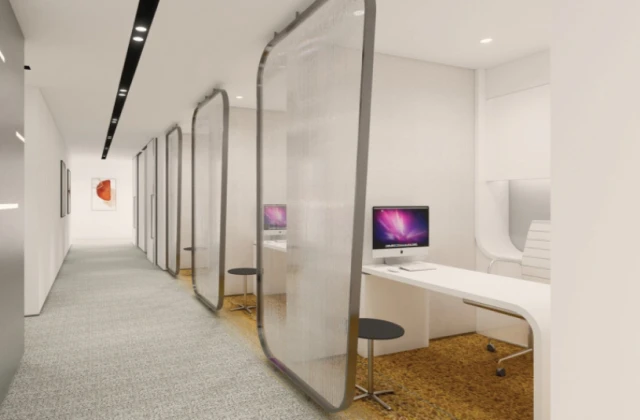
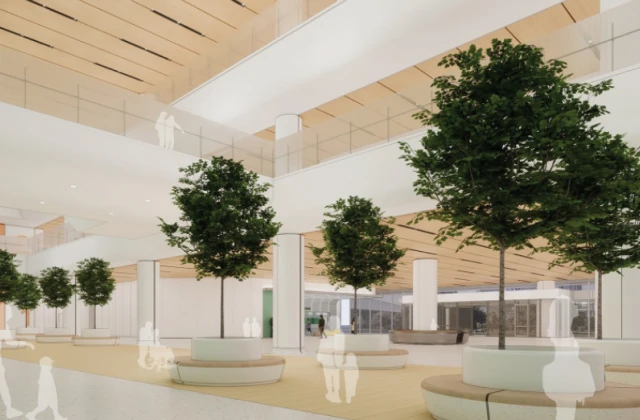
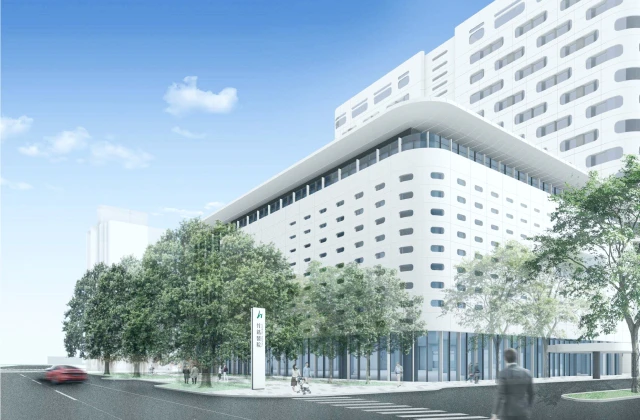
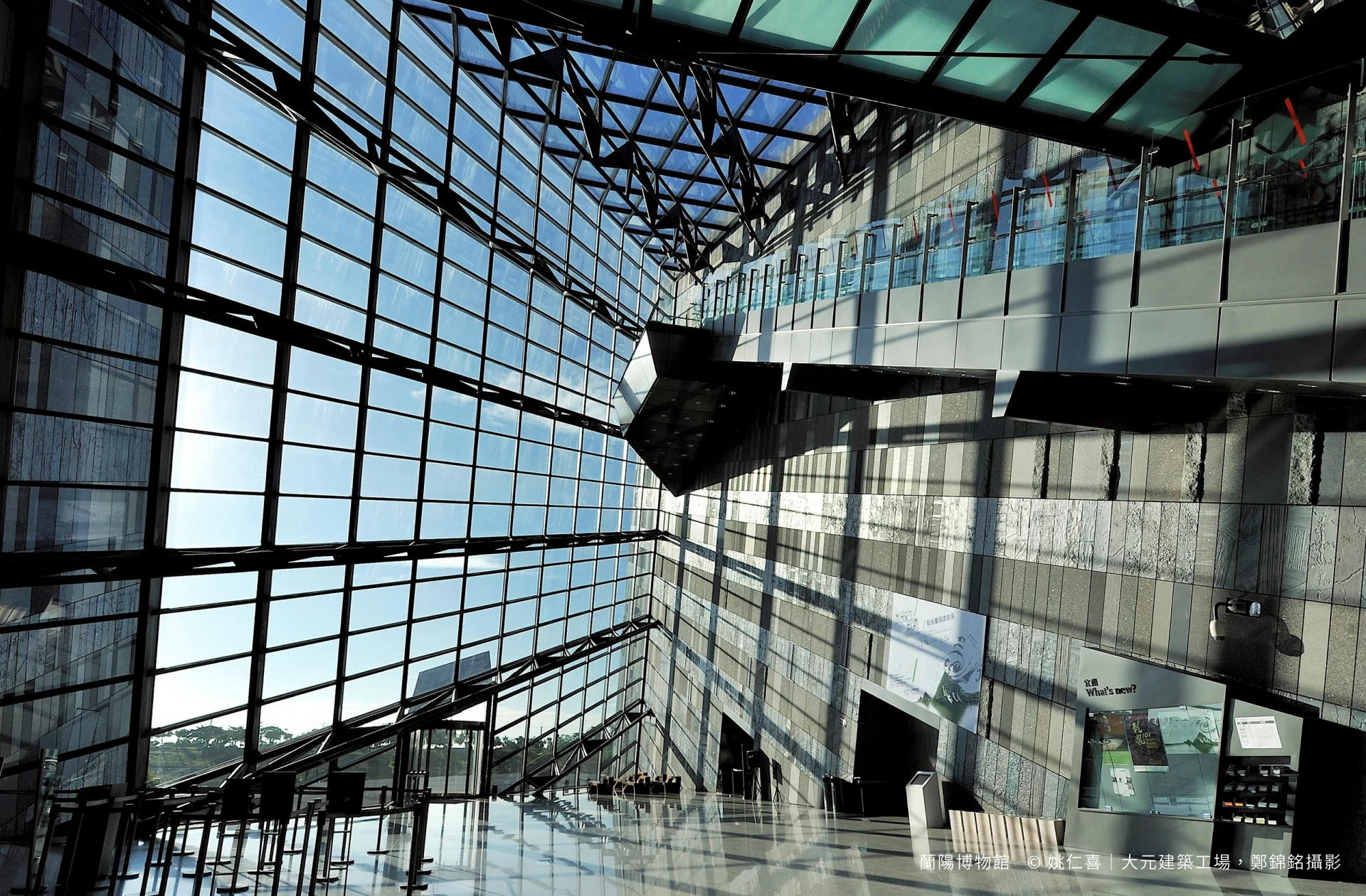
我們邀請美國建築師協會榮譽院士姚仁喜建築師,從新的視角,設計一個視覺美學延伸的醫院。我們採用元代書法大家鮮于樞的半邊「竹」字,作為醫院的標誌,映對虛與實、盈與空,醫院所有同仁對人類生命與幸福奉獻的承諾,永留謙遜的虛竹,追求永不止息的實果。
最後,竹銘選擇了極具挑戰性的實驗性治理架構:不花政府經費、由校友籌資、捐建。捐建人依法可決定董事會組成,但建院的第一時間,我們就決定將董事會過半的席次送給國立陽明交通大學指派,連結學校、校友、研究與教學,將位階定錨。

We invited architect Kris Yao, Honorary Fellow of the American Institute of Architects, to conceive a hospital from a new perspective, one in which visual aesthetics naturally extend into the experience of care. The hospital’s emblem is derived from half of the character “bamboo” (竹) written by the renowned Yuan dynasty calligrapher Xian Yushu. It reflects the interplay between the hollow and the solid, between the intangible and the tangible. It also symbolizes our shared commitment to human life and well-being: to remain, like hollow bamboo, always humble, while continually striving toward meaningful outcomes without end.
Finally, Jumin has adopted an extraordinarily challenging experimental governance structure—a hospital funded and built entirely through alumni support, without government expenditure. Although donors are legally entitled to determine the composition of the board, we chose from the outset to allow National Yang Ming Chiao Tung University to appoint more than half of the board members. In doing so, we sought to firmly anchor Jumin’s positioning, and closely link the university, its alumni, research, and education.
Research by the 2024 Nobel Laureates in Economic Sciences concluded that a nation’s prosperity depends upon inclusive institutions. It is our hope that, through a culture of openness and institutional flexibility, Jumin will continue across generations to attract exceptional talent, foster ground-breaking innovation, and grow into a distinctive hospital deeply worthy of public trust.
In the semiconductor industry, it may take ten or even twenty years to refine a single breakthrough. Only by holding firmly to one’s purpose and remaining steadfast through hardship does meaningful progress be made. Healthcare concerns the well-being of all. It calls for even greater perseverance and dedication. It is an endless pursuit continually evolving with the times.
The Qing dynasty painter Zheng Banqiao once wrote of bamboo:
Biting tightly onto the green mountains, not letting go;
Roots already taken deeply in creviced boulders.
Still resilient after endless grinding and hammering;
Withstanding winds from every direction.
Jumin Hospital is fortunate to be rooted in Taiwan’s fertile ground of technology and medicine. After enduring the tempering winds from every direction, it aspires to grow into a vibrant new presence, a symbol of resilience and a source of hope for the beauty of human life.