

Calligraphy of Masters
Underpinned by Culture and Aesthetics
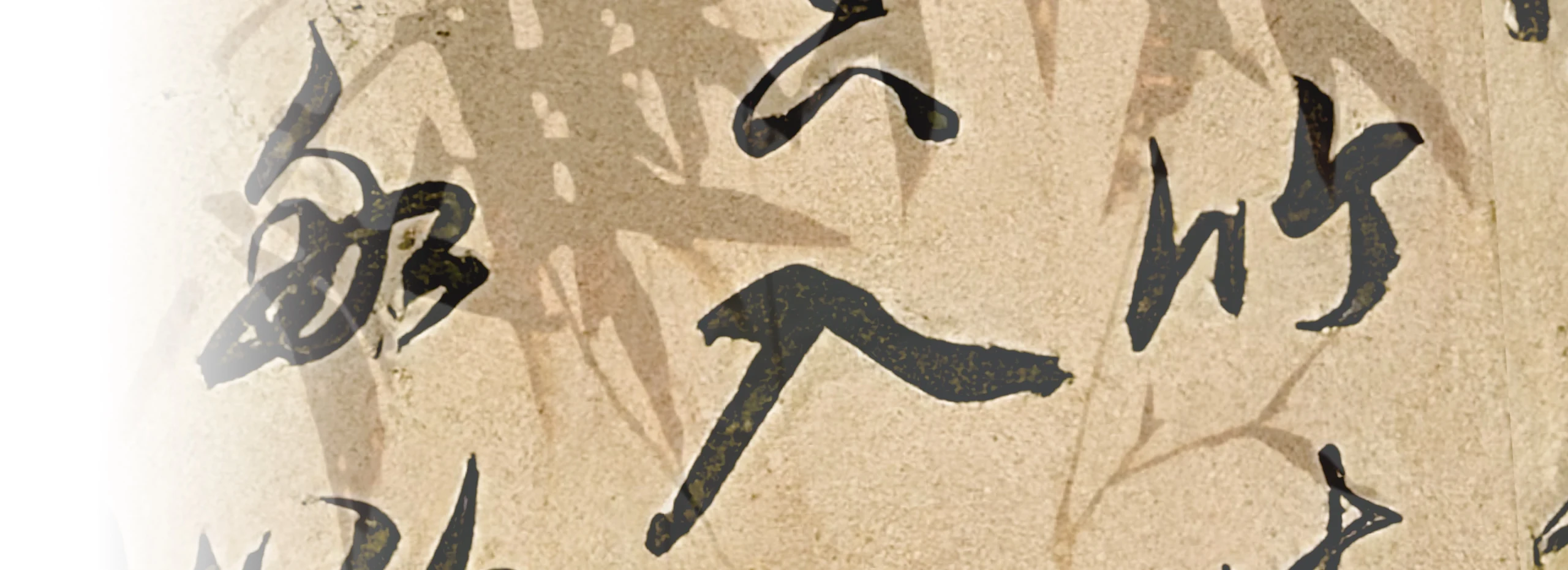
The emblem of Jumin Hospital is drawn from Song When Drunk, part of Authentic Calligraphy in Semi-Cursive Script, which includes twelve poems by Tang dynasty poets, a calligraphic masterpiece by the Yuan dynasty master Xianyu Shu. The authentic calligraphy is currently kept in the National Palace Museum, Taipei.
Xianyu Shu (1246–1302), courtesy name Boji, also known by the sobriquets Kunxue Shanmin and Jizhi Laoren, was a native of Yuyang, present-day Jixian in Beijing, served as a Doctor of the Ministry of Rites. In the Yuan dynasty, his calligraphy was celebrated alongside that of Zhao Mengfu, together known as the “Two Masters.” Zhao Mengfu held him in the highest regard, once remarking, “I studied cursive script alongside Boji, yet he surpassed me by far. However much I strive, I cannot equal him.”
Unlike more formal script styles, Xianyu Shu’s running and cursive scripts are natural and expressive. His brushwork conveys strength while remaining fluid and agile. In Song When Drunk, the character for “bamboo” (竹) vividly captures both the form and spirit of bamboo, reflecting an extraordinary level of artistic mastery. This achievement resonates with Jumin Hospital’s pursuit of professional excellence: depth builds over time, complexity comes with ease, and true mastery appears effortless.
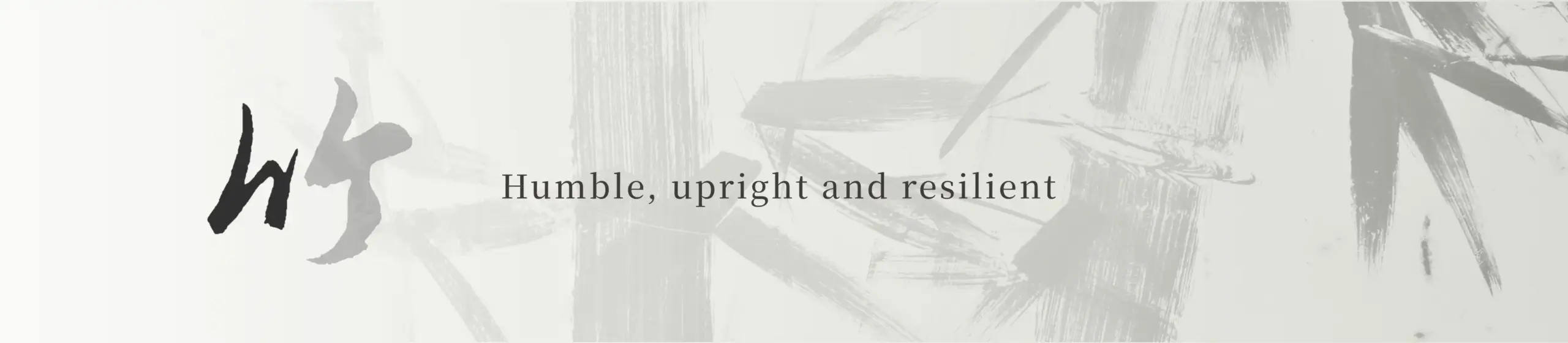
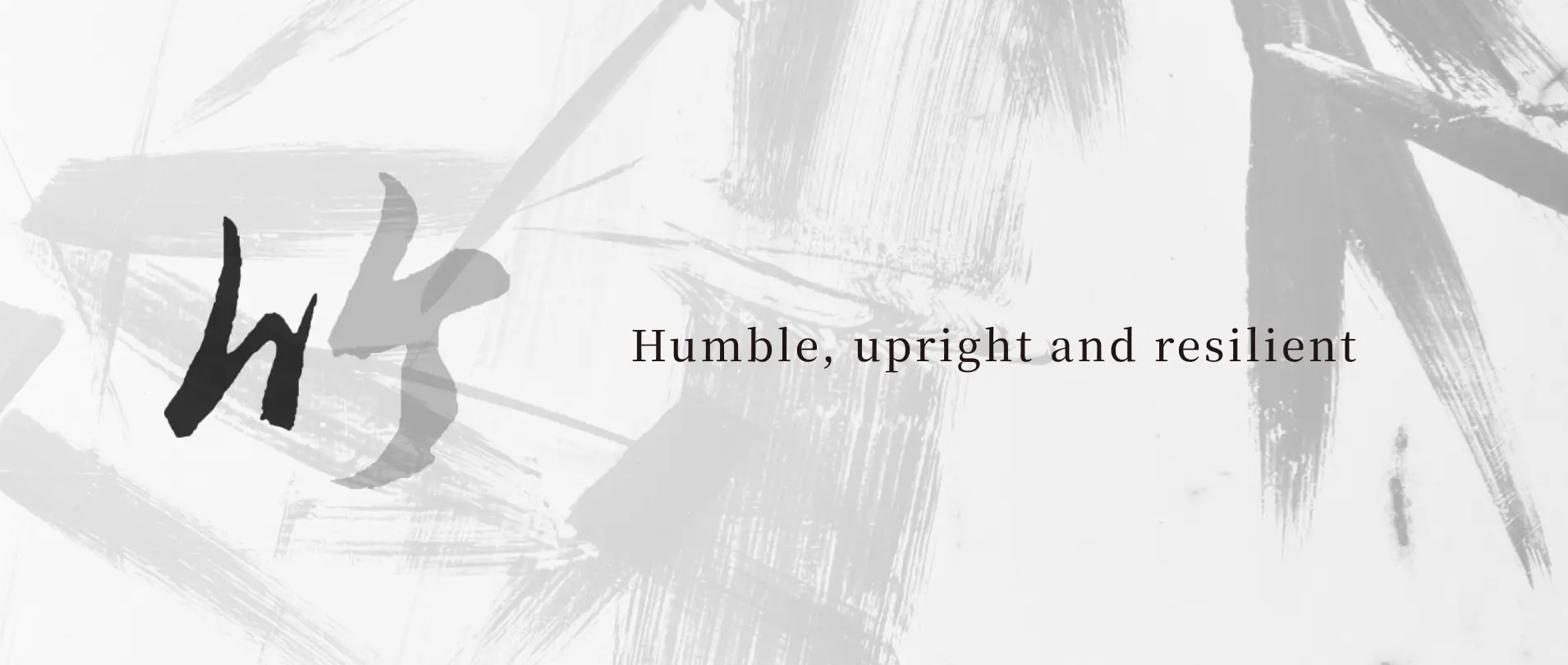
In East Asian culture, the character “bamboo” (pronounced “zhu”) in Jumin carries a vast range of meanings. Bamboo stands upright and resilient, enduring frost and snow without withering; it is a symbol of vitality and strength. It is hollow yet principled, long embraced by scholars as a reminder of humility and integrity. Lush and evergreen, it also brings a sense of quietude and composure. Even the form and spirit of bamboo, along with its representation in calligraphy and related techniques, have been the subject of extensive discourse.

Clear Vision Before Action
The Wisdom of Su Dongpo and Zheng Banqiao
On the art of painting bamboo, Su Dongpo once wrote, “To paint bamboo, one must first have a complete image of it in the mind. Observe it intently, brush in hand, and what you wish to paint will appear. Then, seize the moment and follow it with swift, decisive strokes, capturing what you see, like a hare darting or a falcon diving, for if you hesitate, it is gone.” His insight, whether applied to meticulous detail or free expression, has deeply influenced generations that followed. Zheng Banqiao carried this spirit further into the realm of metaphorical expression. In his paintings, bamboo embodies resilience and resolve, captured in lines such as “clinging fast to mountain green, it does not yield,” and “through countless trials, its strength remains the same.” These works reveal bamboo’s enduring vitality in the face of adversity.
The modern writer Deng Tuo later reflected on bamboo in his inscribed verse: “Hollow at heart yet steadfast in strength, enduring wind and rain without knowing the cold.” Such enduring strength, shaped through time and tribulation, reflects the aspirations of Jumin Hospital. With humility and steadfast commitment, our team strives to care for every patient with dedication and compassion, offering reassurance to patients and their families as they face illness with greater calm, courage and confidence.

Endless Compassion, Life Without End
Unbounded Growth, Never Confined
By dividing the character “bamboo” in half, the design achieves a refined visual simplicity. Yet for Kris Yao, the idea goes further. A complete character suggests something fixed and finished, while the “half-bamboo” leaves room for continuation. In East Asian philosophy, this sense of incompletion implies growth, renewal and limitless possibility. It is a quiet reminder to keep striving, continue refining, and go on and on.
Currently preserved in the National Palace Museum, the ink rubbing of roof-tile end inscribed with “chang sheng wei yang” (lit. “long life unending”) from Han dynasty expresses a timeless wish for enduring life. No matter the circumstances we face, the vibrancy and excitement of life remain open-ended, and the future is always worthy of hope.
Unfinished, yet unending. The pursuit of medical excellence never rests, and compassion for humanity knows no bounds. Every life, in all its depth and brilliance, may find here the possibility of a new beginning. Guided by this aspiration, Jumin Hospital moves beyond convention to become a place where trust takes root and peace of mind gently settles.

Human-Centered Thinking in Smart Healthcare
Professional Thus Composed, Thoughtful Thus Expressive
Built upon two of Taiwan’s greatest strengths—medicine and technology— Jumin Hospital brings together leading expertise from academic and industrial while carrying forward the aspirations of those who came before. For an institution that is ambitious, forward-looking, and willing to challenge convention, what kind of emblem could truly embody its spirit?
In the early stages of the design process, selecting the right symbol proved to be the greatest challenge. There was so much to express, yet a logo must remain clear, refined, and capable of conveying meaning through simplicity rather than explanation. After careful reflection, Founder and Chairman Archie Hwang shared a guiding thought with the team: all advanced medical expertise and technological innovation ultimately serve a single purpose— to earn the trust of patients. “In the end, helping patients feel at ease is what matters most.’
In his vision, visual design should transcend technique and reveal deeper meaning, rather than simply assembling visible symbols. When a design achieves harmony and balance, it naturally carries aesthetic depth and narrative, allowing it to encompass the ideas of medicine and technology without stating them directly.
True expertise speaks for itself, the design therefore remain composed and understated, without the need for self-assertion. Through the care invested in every detail, it moves beyond rigid formalism, and expressing its philosophy with openness and grace. In doing so, it seeks not only to earn trust, but also to offer genuine reassurance.
For this reason, the design sets aside the Rod of Asclepius, along with conventional imagery associated with engineering or technology. It also avoids symbols that seek to suggest superiority or extreme. Instead, it turns its focus toward people , culture and the deeper values at the heart of care.